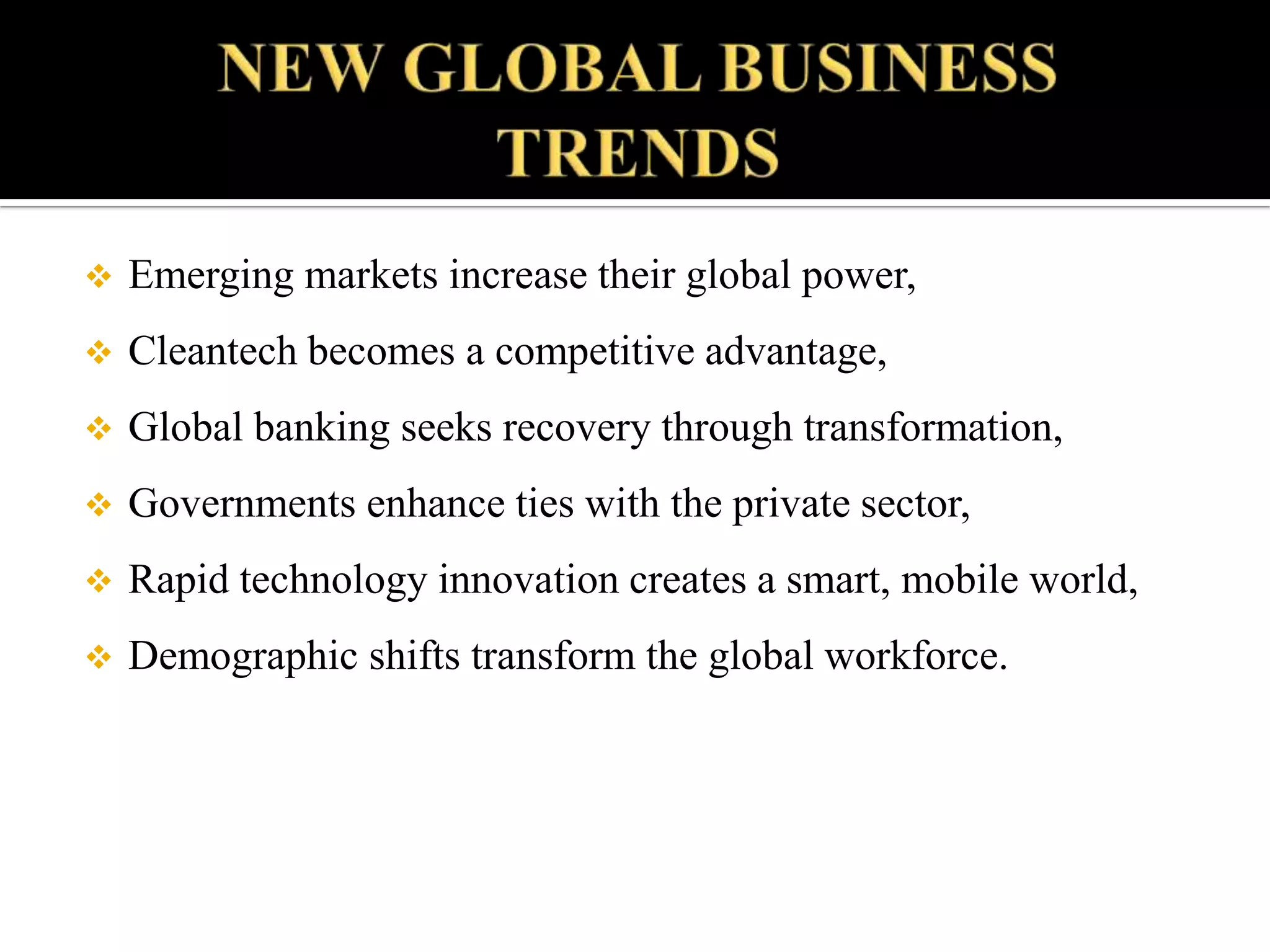
The pace of digital transformation doesn't seem to be slowing down. From how businesses function to the way that people interact with those around them The technology industry continues to transform nearly every aspect of modern life. Certain shifts have been taking place for years and are now at critical mass, while others have appeared quickly and stunned entire industries. In the event that you are in the field of technology or just live in a society that is increasingly shaped by it knowing where things are in the future gives you a significant advantage. Here are the top ten digital technology trends that matter most in 2026/27 and beyond.
1. Artificial Intelligence Changes From Tool To TeammateAI has moved from being just a new technology or shortcut into something much more integrated. For all kinds of industries AI machines now work as active collaborators, not passive assistants. For software development, AI edits and writes codes with engineers. In healthcare, it flags warning signs that human eyes might miss. In content production, marketing along with legal and other services AI takes care of first drafts and routine analyses so that human professionals can concentrate more on thinking higher levels. The move is less about replacement and more about defining how human work is when the repetitive layer is performed automatically.
2. The Insurgence Of Agentic AI SystemsThe next step in the evolution of AI assistants, agentic AI refers to machines that are capable of planning and carrying out tasks with multiple steps autonomously. Rather than responding to a single prompt their systems break down complex objectives, come up with an action plan, utilize various tools and data sources, then carry by following the course of action without any input from humans. In the case of businesses, this means AI that manage workflows as well as conduct research, transmit messages, and update systems without supervision. For people who use it every day, it refers to digital assistants which actually complete tasks instead of simply answering questions.
3. Quantum Computing Enters Practical TerritoryQuantum computing has been within the realms of theoretical promise. However, that is changing. While universal quantum computers remain a work-in-progress However, more specialized systems are beginning to demonstrate significant advantages in the areas of drug discovery, materials science, logistics optimization and financial modeling. Major technology companies and national governments are ramping up investments in new quantum systems, and the race to be able to reap a real commercial advantage is increasing. Companies that pay attention now will be better prepared as the technology develops.
4. Spatial Computing and Mixed Reality Expand Their FootprintAfter the launch of commercially available multi-faceted mixed reality headsets that are gaining a lot of attention, spatial computing has been able to find practical usage cases that go beyond gaming and entertainment. Architecture firms make use of it for deep review of designs. Surgeons train in complex procedures within virtual environments. Remote teams collaborate inside shared 3D spaces. As hardware gets lighter and less expensive, spatial computing is likely to become a standard layer of how digital data is utilized, navigated, and acted on both in professional and everyday contexts.
5. Edge Computing Brings Processing Closer to the SourceCloud computing has changed the way things are possible, by centralizing processing power. Edge computing is now dispersing it once more, and for great reason. by processing data near where it is generated, whether in a factory floor, the hospital ward, or inside a connected vehicle, edge computing reduces the amount of latency, increases reliability, and helps to reduce the bandwidth requirements of constant cloud communications. For applications where instantaneous response is not a must, from autonomous vehicles, urban automation and smart cities, edge computing is increasingly important.
6. Cybersecurity Evolves Into A Continuous DisciplineThe threat evolving landscape has become too fast and complicated for the traditional model of regular audits and reactive patching. The threat landscape will change in 2026/27 when serious organizations employ cybersecurity as a regular organization-wide discipline, not just being an IT department's concern. Zero-trust design, which states that neither system nor user are trustworthy as a default, is now becoming common practice. AI-driven systems monitor networks in real time, identifying irregularities prior to they become security attacks. Humans are the most abused vulnerability, that is why security training and culture crucial as any technological solution.
7. Hyperautomation connects the Dots Between SystemsHyperautomation employs a combination of AI Machine Learning, AI, and robot process automation to find and automate entire workflows rather than tasks that are isolated. In contrast to simple automation, it is a look at the connecting tissue between the systems that used to require human collaboration and removes the obstruction completely. Banking and insurance companies as well as supply chain administration and public service sectors are discovering that automation does more than reduce costs, but fundamentally changes what a company is capable of delivering with speed.
8. Green Tech And Sustainable Digital InfrastructureThe environmental impact associated with digital infrastructure is under increasingly focus. Data centers consume massive amounts of energy. The rise of AI working on training has made the consumption of electricity to a higher level. To counter this, the industry continues to invest more efficient equipment, renewable-powered facilities, coolers that use liquids as well as better ways to manage workloads. For companies that have ESG commitments that require carbon emissions, the footprint of technologies is no longer something that will easily be absorbed into the background.
9. The Democratisation Of Software DevelopmentAI-powered platforms with no-code or low-code have put software development within anyone with no formal programming background. Natural interaction with languages and visual environments enable domain experts to build functional applications or automate complex tasks and even integrate systems of data without having to depend on external developers. The pool of people capable of developing digital solutions is growing quickly and the consequences for agility in business and the pace of innovation are enormous.
10. Digital Identity And Data Sovereignty The Future of Data Sovereignty and Digital IdentityAs digital life becomes more sophisticated concerns about who holds personal information and how to verify identity online are now more important than minor concerns. Privacy-preserving identity frameworks that are decentralised, privacy-enhancing technology, and more robust data portability rights are all increasing in popularity. Both platforms and governments are being pushed toward options that provide individuals with more authentic control over their digital identities and better insight into the ways in which their data is utilized. The path is already set even if its path is disputed.
The above trends aren't isolated events. They feed on and speed up one another in a digital space that is evolving faster than ever before in the past. Being aware is no longer only useful to technologists. In a society that has been created by digital forces, it's becoming increasingly relevant for everyone. For more detail, check out some of these trusted pressecenter.dk/ for more reading.
 The 10 Digital Social Shifts Driving The Way We Communicate In 2027
Social media has become so deeply woven into the fabric of everyday life that detaching its influence on culture in general is becoming increasingly difficult. It shapes how people form opinions, establish identities in their lives, consume entertainment, track news, conduct relationships, and engage in public life. The platforms themselves continue to develop quickly, driven by competition, regulation and the relentless desire to attract and hold the attention of humans. What's coming up in 2026/27 is a social media ecosystem that is more splintered, more AI-driven, and more relevant than at any other point. Here are ten of the emerging trends in the world of social media that will influence culture that will be influencing culture in 2026/27.
1. AI-Generated Content The Floods Every PlatformThe quantity of AI-generated content on all social media channels has reached a scale that is fundamentally changing the world of information. Photos, videos, written posts, as well as entire accounts that produce content made up of synthetic material at machine speed are now a standard feature of all major platforms. There are a variety of implications from relatively benign, AI-assisted creators making more content faster, to the genuinely corrosive synthetic, artificially fabricated misinformation personas and fabricated consensus at a level that human moderation simply cannot keep pace with. The ability to differentiate human-generated from AI-generated content is being viewed as a technical challenge as well as a crucial cultural skill.
2. Short-Form Video Remains Dominant But EvolvesShort-form videos established itself as the preferred format of content for the current era, and its dominance will continue until 2026/27. What are changing is the high-end of the content as well as the viewers who consume it. Creators are developing more nuanced formats within the constraints of short form and the public is showing an increasing desire for information that uses the format strategically instead of just optimizing for the first three seconds of attention. Platforms are themselves experimenting using longer formats and better engagement techniques as they attempt to transcend the scroll and create the type of ongoing time-on the platform that results in commercial value.
3. The Creator Economy matures and StratifiesThe creator economy has morphed into a major economic sector however, the distribution of the rewards is increasingly uneven. It is true that a relatively small proportion of creators at the top of the attention economy earn considerable income, while a vast middle of the market struggles to convert attention into sustainable revenues. Changes in platform algorithms, resulting in volume of content and problem of standing out an environment in which AI can reproduce content from the surface for free are all putting pressure on mid-tier creators. The most durable creator enterprises in 2026/27 will be those that are built on genuine community, an individual perspective, and direct-to-market models that reduce dependency on algorithms of platforms.
4. Alternative Platforms and Decentralised Platforms Gain GroundDisillusionment with the major centralised platforms, fueled by concerns about algorithmic control in data privacy and content issues with moderation and the concentration of power in a comparatively small handful of technology companies is driving the growth of alternative social networks that are decentralised. Social networks with federation based on Open Protocols, niche community platforms targeting specific interests, and models that are based on subscriber support, which align incentive incentives to the user rather than the needs of advertisers have all found audiences. The main platforms have huge capacity advantages, but their ecosystem is growing to be more diverse.
5. Social Commerce Its a Major Shopping ChannelThe incorporation of retail sales directly into social media feeds streaming, live streams, and creator content has resulted in a shift in shopping habits that is notably evident among the younger age groups. Social commerce, where users can discover and buying items without leaving the site, is growing rapidly across every social channel. Live shopping platforms, developed in Asia and now growing globally, combine entertainment and retail with a focus on rate of conversion and high level of engagement. For brands, the influencer relation has grown from awareness marketing into a direct sales channel, with quantifiable revenue attribution.
6. Authenticity And Raw Content Push Back Against PolishA direct response to the decades of aspirationally produced, highly produced designed social media content is growing a desire for rawness with spontaneity, humour, and imperfections. Content creators who are unfiltered which express genuine uncertainty and present lives that look like real people rather than aspirationally impossible are reaching audiences which polished content struggles to get to. This is not a complete rejection of quality, but rather an adjustment of what quality can mean in a time when authenticity is becoming a source of competitive advantage. The irony that raw authenticity can become as carefully constructed as any other format of content can not be ignored by the more self-aware corners of the internet.
7. Mental Health And Platform Design Are Subject to Greater ScrutinyThe relationship between social media use and psychological health specifically among youth continues to draw significant research, regulatory attention, and public discussion. Age verification demands, screen time tools transparent algorithmic obligations and limitations on certain content recommendations are all are being enacted or being actively considered across the major jurisdictions. Platform design choices that exploit psychological vulnerabilities to maximise engagement are under scrutiny and is beginning to produce genuine changes to how products are developed and managed. The gap between the information platforms share about the impact of their design choices and the information they release publicly remains a key point of disagreement.
8. Communities and Interest-Based Spaces Gain In importanceAs the broad public square model of social media, where everyone posts to everyone about everything, has revealed its limitations in terms the polarisation, toxicity, and excessive noise. Smaller and less specific community spaces are increasing in appeal. There are subreddits and Discord servers, Substack communities or private chats and niche forums that focus on specific areas of interest or identity are where thousands of people are finding connectivity and social interaction that they no longer expect from all-purpose platforms. This shift is indicative of a greater acceptance that the sheer size that creates platforms is also what creates difficult environments for communities to flourish.
9. Political And News Content Faces Platform RetreatSome major social media platforms have made conscious choices to decrease the importance of news and political information in the algorithmic recommendation noting the potential for toxicity and the moderation cost it imposes on its value to the user experience. Their implications for debate journalistic, political, and public communications are significant, and they're being debated. For news outlets that constructed distribution strategies around the social media channel, the withdrawal poses a major challenge. Political actors used to using platforms as direct communication channels, it's necessitating a review of their digital strategy. The wider question of what function social platforms are supposed to play in democratic information ecosystems remains unclear.
10. Digital Identity and Online Reputation are Long-Term AssetsThe growth of a web existence over a recommended site long period of time is a process that individual manage with greater control. Digital identity, which is the extent of what an individual has posted, shared and built, and been associated with across different platforms, could have real-world implications for relationships, careers, and opportunities that were not widely understood in the early days of social media. The control of online reputation, including what to share or curate, what to remove, and how to build a steady and trustworthy online presence as time goes by, is now an essential life skill rather than something that is only relevant to celebrities or people working in media-related roles. It is a fact that the permanence and searchability online content means that choices taken casually in one setting can resurface in another with ramifications that are hard to predict.
The social media landscape in 2026/27 is significantly more powerful, less contested, and more consequential than any other time during its relatively short time. The above-mentioned trends represent a world in flux as the rules around engagement and communication are renegotiated by regulators, platforms users and creators at the same time. Making it work for you, as an individual, a business, or a society, is more complex as opposed to the early utopian visions of social media could be required. For additional detail, visit some of these trusted nyhetsvinkeln.se/ to learn more.